
Last updated November 15, 2026
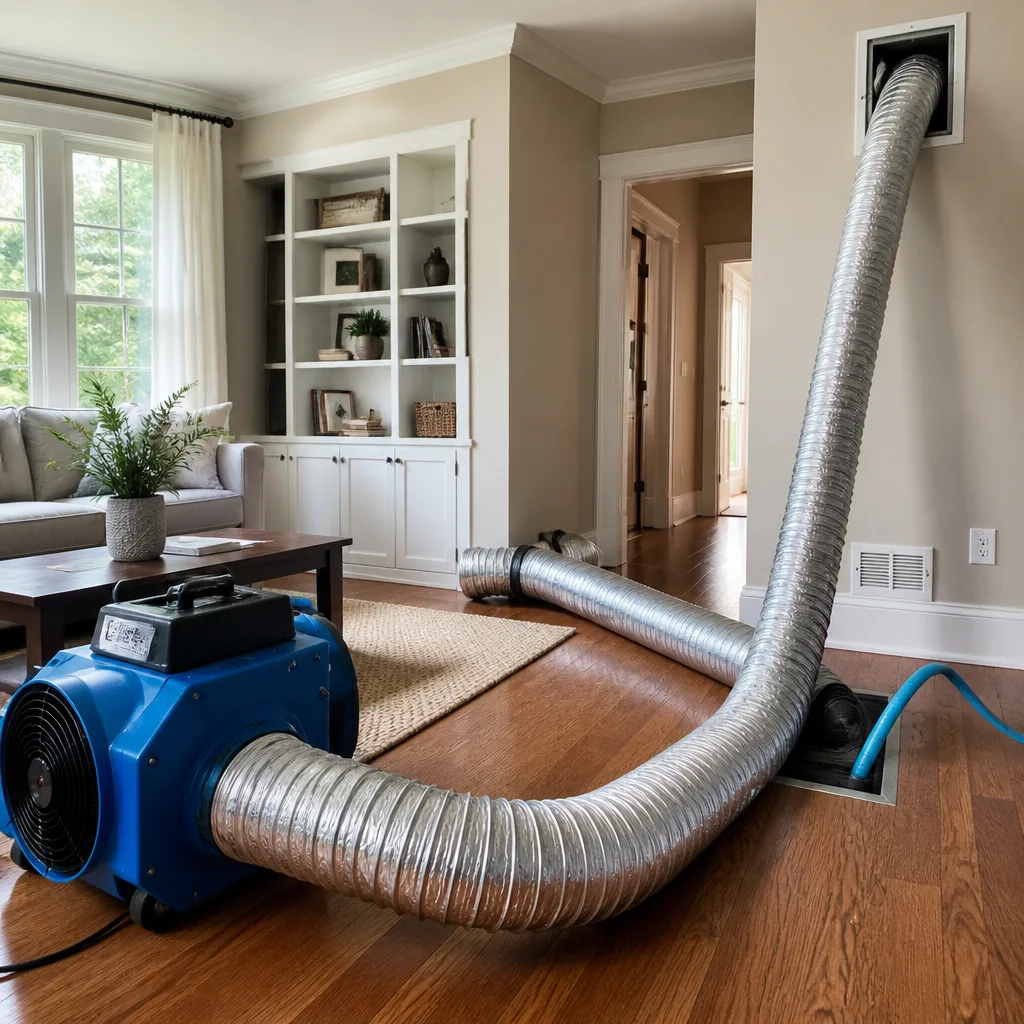 Whole-home duct cleaning
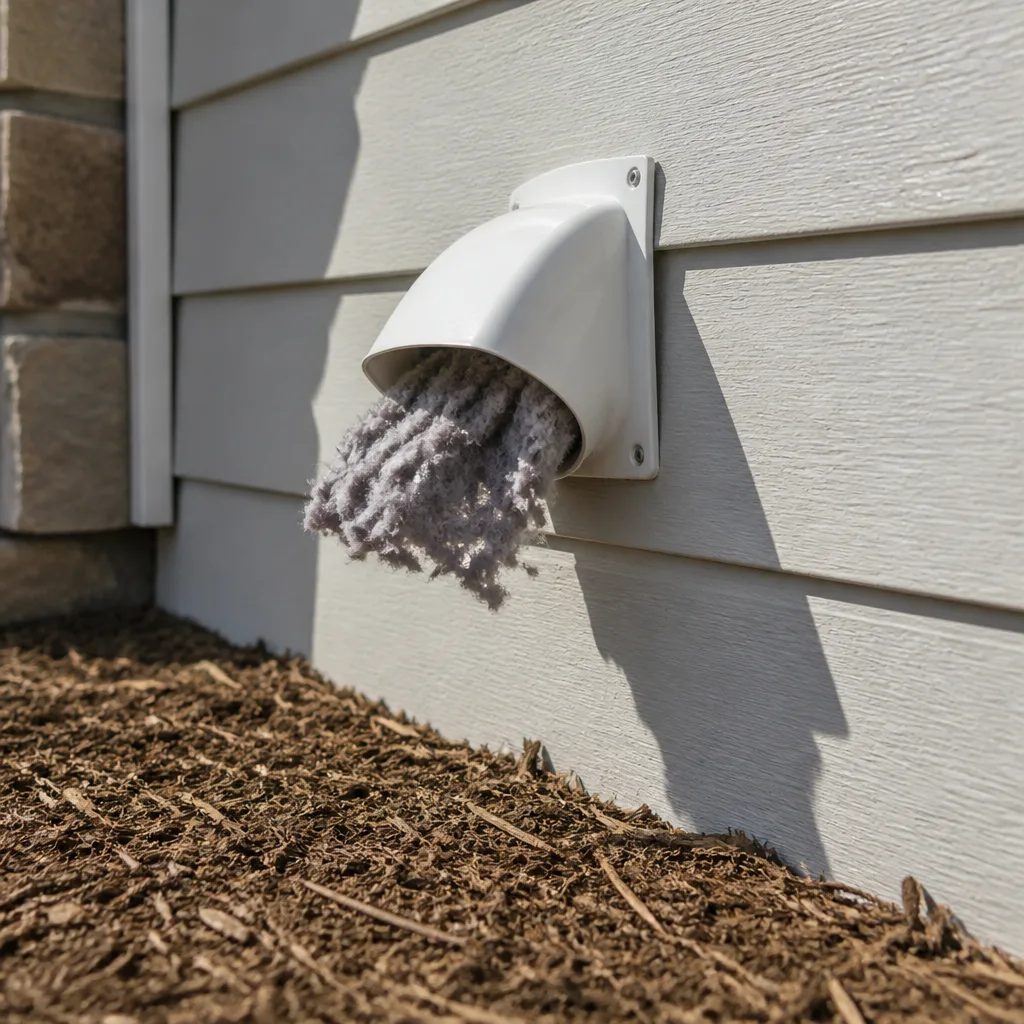 Dryer vent cleaning
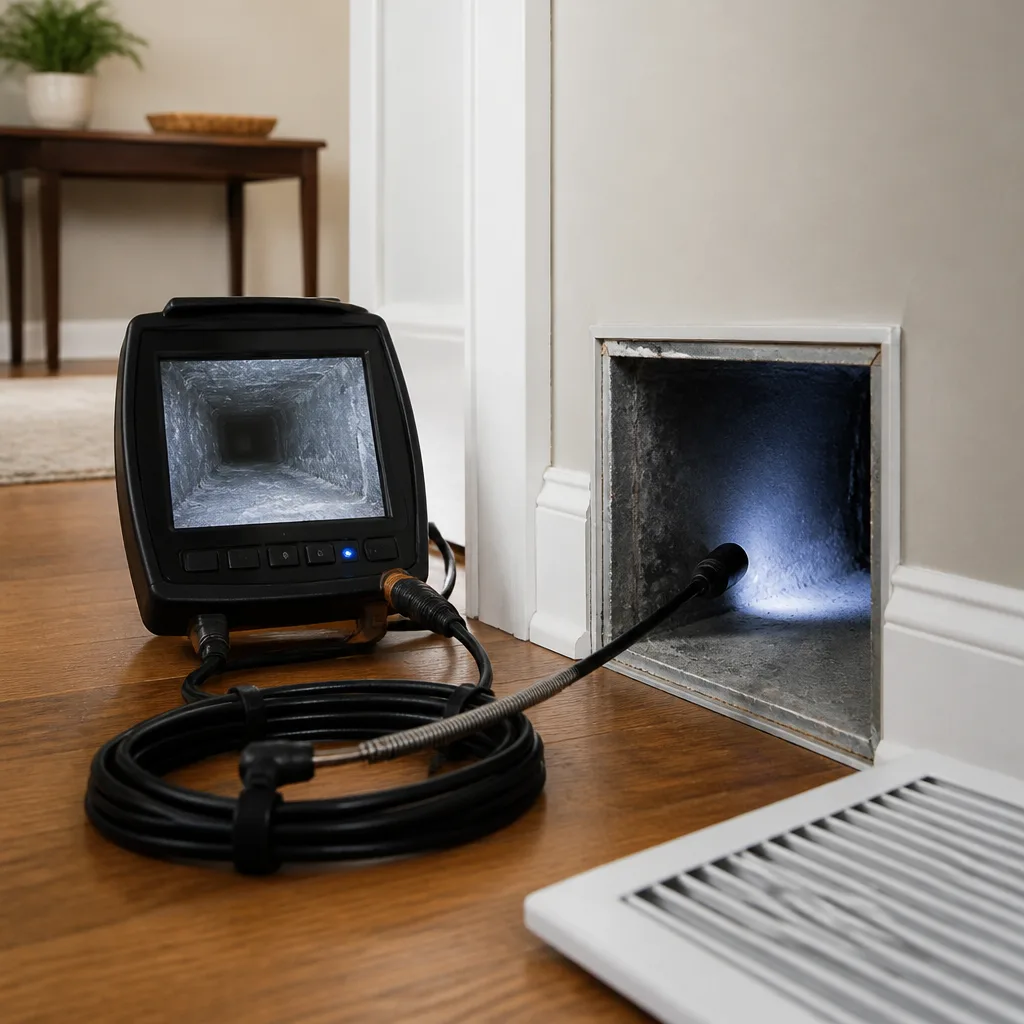 Camera inspection
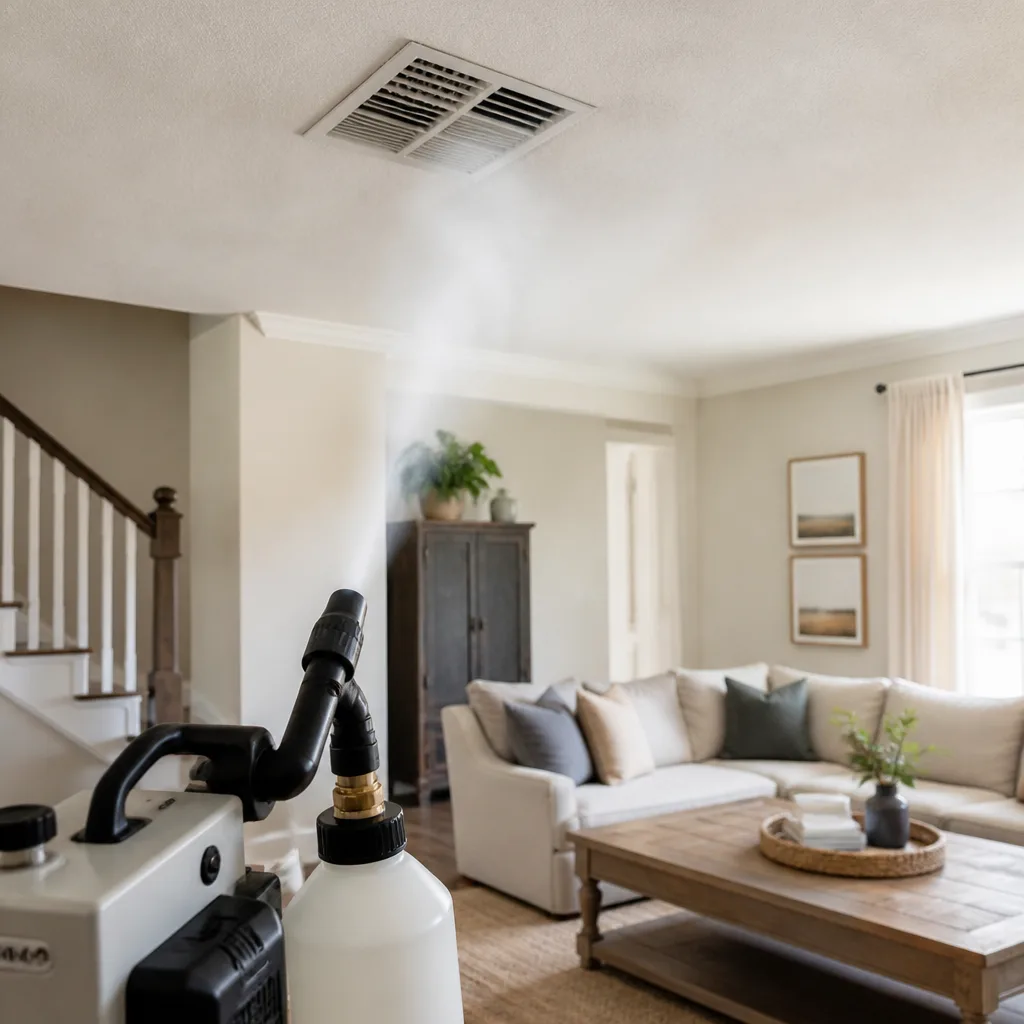 Sanitizing & deodorizing
Whole-system duct and dryer vent check with before-and-after photos - you see exactly what came out of your vents
That "$99 whole-house special" is a bait ad - the real number appears once they are in your hallway, or the "clean" is a shop-vac at the register. We photograph the inside of your ducts before and after instead.
How to Hire an Air Duct Cleaning Contractor in Palm Bay: A Step-by-Step Guide
Florida does not require a specific license to clean air ducts. That single fact changes how you should shop for this service. In a licensed trade, a state board does part of the vetting for you. Here, it doesn’t. The person who shows up at your door in Palm Bay could be running a legitimate, equipment-heavy operation, or they could have bought a wet-dry vac and a magnetic sign last month, and nothing on the truck will tell you which. This guide gives you a technical framework for telling the two apart: what certification actually means, which equipment questions separate real contractors from pretenders, how to read quotes that are priced three different ways, and what a proper scope of work looks like before anyone touches your ducts.
Quick Answer
Hire an air duct cleaning contractor in Palm Bay by verifying NADCA ACR certification directly through NADCA, asking which specific equipment brands they use (a qualified contractor will name them, like Rotobrush or Nikro), requiring pre- and post-cleaning photos, and getting a written whole-system scope of work with a flat price before any work begins. Skip anyone who quotes per-vent over the phone, sells door-to-door specials, or can’t explain how they contain the dust they pull out of your system.
Styles & brands we work with
- Whole-home duct cleaning
- Dryer vent cleaning
- Camera inspection
- Sanitizing & deodorizing
Table of Contents
- Why Florida’s Duct Cleaning Market Is Hard to Read
- What NADCA ACR Certification Actually Requires
- The Equipment Questions to Ask Before You Book
- Red Flags Specific to the Palm Bay Market
- How to Compare Quotes When the Line Items Don’t Match
- What a Legitimate Scope of Work Must Include
- What to Watch For on the Day of the Job
- Cleaning vs. Repair: Knowing Which You Actually Need
Why Florida’s Duct Cleaning Market Is Hard to Read
Most home services in Florida sit behind a licensing wall. Electrical work, plumbing, roofing, HVAC installation: each has a state or local credential that weeds out the bottom of the market before a homeowner has to think about it. Duct cleaning doesn’t work that way. There’s no dedicated state license for it, which means the filtering job falls entirely on you.
That’s not a reason to panic. It’s a reason to shop differently. In a licensed trade you ask for the license number and move on. Here, the credential that matters is voluntary and technical: certification through NADCA, the National Air Duct Cleaners Association. A contractor who has pursued that certification has chosen to be held to a written standard when nobody made them. That’s a meaningful signal.
The gap between a low-bid operator and a technically qualified one is enormous, and it shows up in two places. First, equipment. A shop vac and a length of hose cannot pull years of settled debris out of a trunk line, and it certainly cannot contain it. Second, scope. Cleaning without inspection means defects get cleaned around, not fixed. In a Palm Bay home where the air handler runs most of the year, duct problems get worse faster than they would in a cooler climate.
Our technicians have up to 9 years of experience, and the pattern we see in this market is consistent: homeowners who research before booking end up with a better result than homeowners who book on price. This guide is the research.
What NADCA ACR Certification Actually Requires
ACR stands for Assessment, Cleaning, and Restoration. It’s NADCA’s standard for how this work should be done, and it’s the closest thing the industry has to a rulebook. Asking “are you NADCA certified?” is a start, but it’s a weak question on its own, because anyone can say yes. The better move is to understand what the certification covers and then verify it.
What the ACR standard addresses, in plain terms:
- Assessment first. The contractor is expected to evaluate the system before cleaning it, not just show up and run equipment. That includes looking at the condition of the ductwork, the air handler, and the components attached to it.
- Containment. Cleaning has to be done in a way that keeps disturbed debris from spreading into the living space. This is where negative air pressure and HEPA filtration come in.
- Source removal. The standard is about physically removing contaminants from the system, not fogging, spraying, or sealing them in place.
- Restoration. After cleaning, the system should be left in working condition. If the cleaning process dislodges or reveals a defect, it gets addressed.
To verify, don’t rely on a sticker or a logo on a website. NADCA maintains a directory of certified professionals, and a legitimate contractor won’t be bothered by you checking. In our experience, the contractors who get uncomfortable with that request are the ones who don’t have the certification to begin with. Anyone worth hiring will tell you to go look. That’s the same confidence behind our own standing invitation: ask to see our equipment. No one’s offended by a homeowner who wants proof.
One clarification worth making: certification is not a license, and nobody should present it as one. It’s a voluntary technical credential. It tells you the contractor has committed to a documented process. It doesn’t replace your own questions.
The Equipment Questions to Ask Before You Book
This is the most useful section in this guide. Equipment is where the real difference shows, and it’s the easiest thing for a homeowner to evaluate, because you don’t need technical training to hear whether an answer is specific or vague.
Ask two questions. Listen closely to the answers.
- “What equipment will you use to clean the system?” A qualified contractor answers with names. Rotary brush systems, HEPA-filtration vacuums, negative air machines. Push a little further: ask whether the vacuum is HEPA-rated and whether they bring a negative air machine. If the answer is “we use a special truck-mounted system” with no further detail, or “we use a vacuum,” you’ve learned what you need to know.
- “How do you keep the dust from ending up in my house while you work?” The right answer involves negative air pressure: the work area is put under controlled airflow so contaminants move toward the machine instead of into your living room. A shop vac recirculates fine particulate back into the air. A HEPA unit with a true sealed filtration system captures it.
This is the difference between professional-grade equipment and a shop-vac shortcut, and it’s the reason we run Rotobrush rotary contact cleaning systems and Nikro HEPA-filtration vacuums on jobs in Palm Bay. Rotobrush is the system professional HVAC and restoration contractors specify for contact cleaning inside ductwork. Nikro’s HEPA equipment captures and contains what gets loosened rather than pushing it back into the house. Abatement Technologies negative-air machines create the controlled airflow that keeps the whole process contained. Those brand names matter because they’re the ones trained contractors recognize.
If a contractor can’t name their equipment, that’s not a personality quirk. It usually means there isn’t much equipment to name.
Red Flags Specific to the Palm Bay Market
Some warning signs are universal. Others come up repeatedly in this part of Brevard County, and they’re worth knowing before you pick up the phone.
- Door-to-door specials. A knock at the door offering a $49 whole-house duct cleaning is the oldest move in this trade. The advertised price covers a superficial pass, and the real cost shows up as add-ons once the technician is inside. A legitimate contractor quotes a whole-system price for the actual scope of work.
- Per-vent pricing quoted over the phone. Nobody can price your system without seeing it. Vent count doesn’t tell you how much duct runs through the attic or how accessible the trunk line is. A per-vent number is a sales tool, not an estimate.
- No pre- and post-cleaning photos. This one is simple. If you can’t see what came out of your ducts and what the inside looks like afterward, you’re being asked to take it on faith. Ask before booking whether you’ll get before-and-after photos of your own system.
- Vague or missing scope of work. A verbal estimate protects the contractor, not you. If nothing is written down, there’s no agreed definition of “done.”
- No repair capability. Cleaning is half the job. If the contractor inspects and finds a disconnected joint, crushed flex run, or torn insulation, they need to be able to fix it. A cleaner who can only clean will clean around the problem and hand you a bill.
- Pressure tactics tied to health. Legitimate contractors will explain what they found in your system. They won’t diagnose you or your family. If the sales pitch leans hard on fear, slow down.
Palm Bay’s housing stock makes some of these worse. Attic duct runs in this climate take a beating from heat and humidity, and flex duct that’s been sitting in a hot attic for years is prone to sagging, disconnected joints, and torn outer jackets. A contractor who can’t repair ductwork is a contractor who can’t fully solve the problem they’re being paid to address.
How to Compare Quotes When the Line Items Don’t Match
You’ll get three quotes and they’ll be structured three different ways. One is per vent. One is a flat whole-system price. One has a low base number and a page of add-ons. Comparing the bottom lines directly will mislead you, because they don’t cover the same work.
Normalize the quotes before you compare. Convert everything to a single question: what is the all-in price to clean my entire system, and what does that price include?
- Ask each contractor for a whole-system price. If they only quote per vent, ask them to convert it: what will this cost me total, for my house, based on what you’ve seen?
- List what’s covered. Supply and return runs, the trunk line, the air handler and blower compartment, registers and grilles. Ask specifically about each. A quote that covers “the ducts” but not the air handler is not the same job as one that covers both.
- List what’s not covered. Add-ons like sanitizing, sealing, or repair should be itemized separately so you can decide whether you want them, not discovered after the fact.
- Check for the containment step. If negative air and HEPA filtration aren’t in the description, the quote is for a lesser process. That’s fine if the price reflects it, but you should know.
- Confirm the photo deliverable in writing. Pre- and post-cleaning photos of your own ducts should be part of the scope, not a favor.
A word on why some quotes are dramatically cheaper. Duct cleaning has real equipment costs: rotary brush systems, HEPA vacuums, and negative air machines aren’t cheap, and neither is the labor to run them properly through a full house. A price far below the rest of the market usually reflects a different process, not a better deal. The homeowner ends up paying twice: once for the cheap job, and again for the cleaning that actually needed to happen.
If you want the full technical picture on what a professional job involves, our page on air duct cleaning walks through the process step by step.
What a Legitimate Scope of Work Must Include
A verbal estimate is one of the most common mistakes homeowners make in this trade, and it almost always favors the contractor. When the work is described out loud, “clean the ducts” can mean almost anything, and if the result is thinner than you expected, there’s nothing to point to. A written scope of work fixes the definition of done before anyone starts.
Before work begins, ask for a document that includes:
- The specific components being cleaned. Named, not generalized: supply ducts, return ducts, trunk line, registers and grilles, air handler, blower compartment.
- The equipment being used. The brands and types. This is your proof the process is real.
- The containment method. How dust and debris will be kept out of the living space during the work.
- Any repairs identified during assessment. Priced separately and approved by you before proceeding.
- The flat price for the whole system. One number, agreed in advance. Not per-vent, not a base price with an open-ended add-on menu.
- The photo deliverable. Confirmation that you’ll receive before-and-after photos of your system.
That last point earns its own paragraph. “How do I know the work was actually done?” is the question at the heart of every duct cleaning complaint. Photos of your own ducts, taken before and after, are the answer. Anyone can hand you a receipt. A contractor with a real process can show you the inside of your own trunk line, before and after.
This is why the price should be one flat price per system, agreed before work starts, with before-and-after photos included. It removes the ambiguity that low-bid operators rely on.
What to Watch For on the Day of the Job
You’ve vetted the contractor, compared the quotes, and signed off on a written scope. The job itself should be uneventful. Here’s what a professional visit looks like, so you know what’s normal and what isn’t.
- Setup happens before cleaning starts. Expect floor protection, sealed access points, and a negative air machine connected before any brush or vacuum goes into the system. If equipment goes in first and setup comes later, that’s backwards.
- They inspect, then clean. A proper visit starts with an assessment of the system’s condition. If your ducts need repair, you’ll hear about it before the cleaning pass, not after the invoice is written.
- Registers and grilles come off and get cleaned. They’re part of the system. If they’re still in place at the end and nobody touched them, ask why.
- They take photos as they go. Before, during, after. You should end up with a visual record of your own system.
- They explain what they found. Condition of the ductwork, anything that needs attention, what the system looked like before and after. A contractor who does good work wants to talk about it.
One more thing worth checking on the day: watch how the crew handles the air handler. The blower compartment is part of your system’s respiratory tract, and it’s often skipped by operators running a quick per-vent pass. If it’s in the scope, confirm it gets opened and cleaned.
Scheduling around this is straightforward. We answer 24/7. Fast dispatch from 7am to 7pm, Sunday through Friday.
Cleaning vs. Repair: Knowing Which You Actually Need
Not every dirty duct problem is a cleaning problem. Sometimes the ducts are dirty because they’re broken, and cleaning a compromised system only gives you a cleaner version of the same leak. Palm Bay’s attic duct runs deal with heat for most of the year, and that accelerates wear on flex duct, joints, and insulation. A sagging run, a disconnected boot, or a torn outer jacket pulls attic air and insulation fibers into your supply airstream.
Cleaning without inspection misses this. That’s a specific gap worth checking before you hire:
- Does the contractor offer duct repair as a service, or only cleaning? A cleaner who can only clean will clean around a defect and hand you the bill.
- Do they inspect the ductwork or just the duct interior? The condition of the runs and joints matters as much as the dust inside them.
- Are repairs quoted separately with your approval? Yes is the right answer. Repairs should be identified during the assessment and priced for your sign-off.
The right structure is cleaning and repair from one contractor, so a defect found mid-job gets fixed rather than documented and referred. A full-service scope also means you’re not stitching together a cleaner, a repair tech, and an air quality vendor for a single problem. Whole-system understanding matters here: we work with premium indoor air quality brands like Honeywell and Aprilaire, which means the conversation isn’t limited to duct sanitation. Filtration and air quality products are part of the same system.
One more service worth separating out because it’s frequently undersold: dryer vent cleaning. A lint-clogged dryer vent is a leading cause of residential fires, and it deserves real equipment, not a hand vac wave at the exterior flap. If a contractor offers it as a “while we’re here” upsell, ask what equipment they use for it. That answer tells you how seriously they take it.
Common Mistakes to Avoid
- Booking the door-to-door special. The knock-and-offer price is a foot in the door, not a real quote for your system. By the time the technician is inside, the scope has quietly expanded and the invoice has changed.
- Accepting a per-vent quote sight unseen. Vent count is the least useful number in this trade. It doesn’t tell anyone the length of the trunk line, the condition of the runs, or the access in your attic.
- Skipping the equipment question. If you don’t ask what they use, you won’t learn that some operators show up with a shop vac and a promise. Ask for brands. Expect specific answers.
- Settling for a verbal estimate. No written scope, no agreed components, no photo deliverable. A verbal deal protects the contractor every time, because “done” is whatever they define it to be after the fact.
- Hiring a cleaner who can’t repair. Palm Bay attics wear ductwork down, and cleaning around a disconnected joint doesn’t fix the air you’re breathing. Ask whether repair is a service they offer before you book cleaning.
- Failing to ask the certifying body a direct question. “Are you NADCA certified?” is easy to say yes to. Check the directory. A legitimate contractor won’t mind, and you’ll skip a step if they do.
- Forgetting the dryer vent. It’s a separate system with its own fire risk, and it tends to get ignored until someone notices the dryer taking two cycles to dry a load.
See the difference
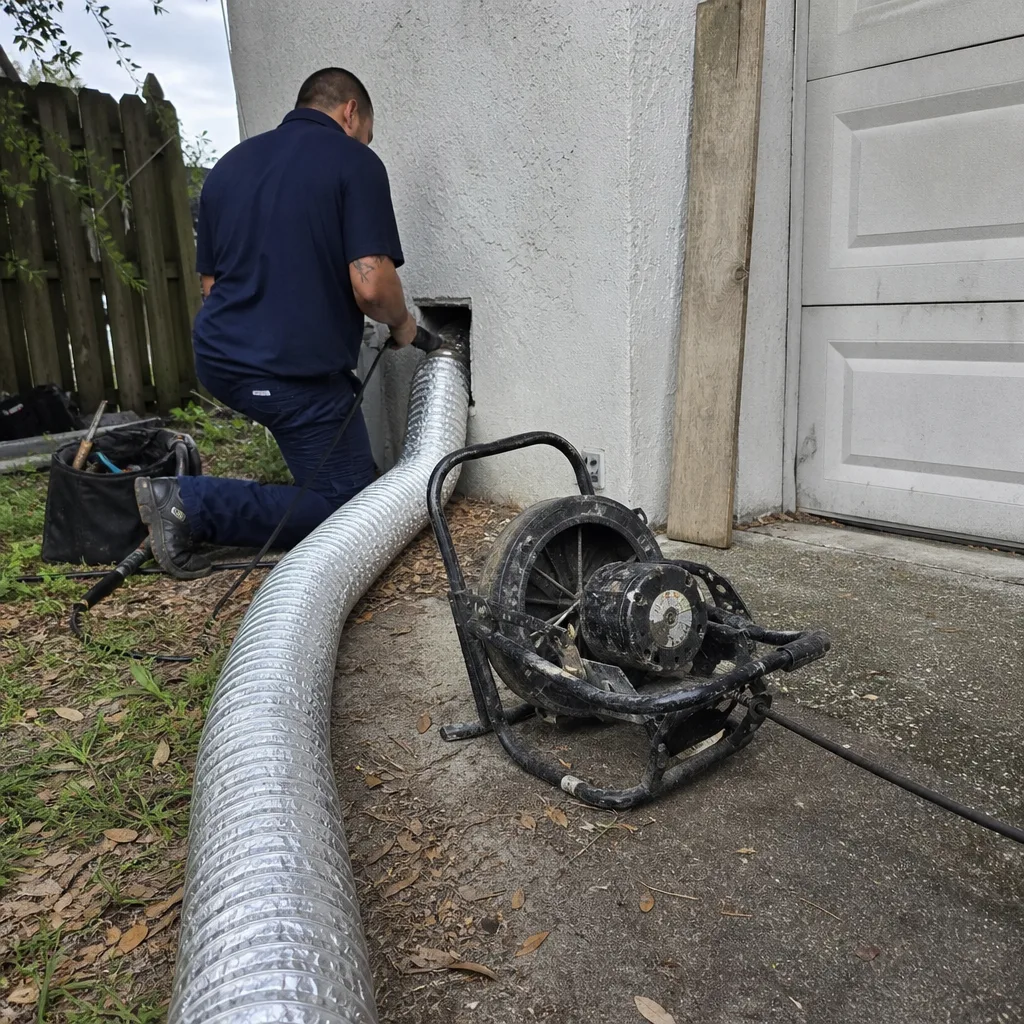 Before
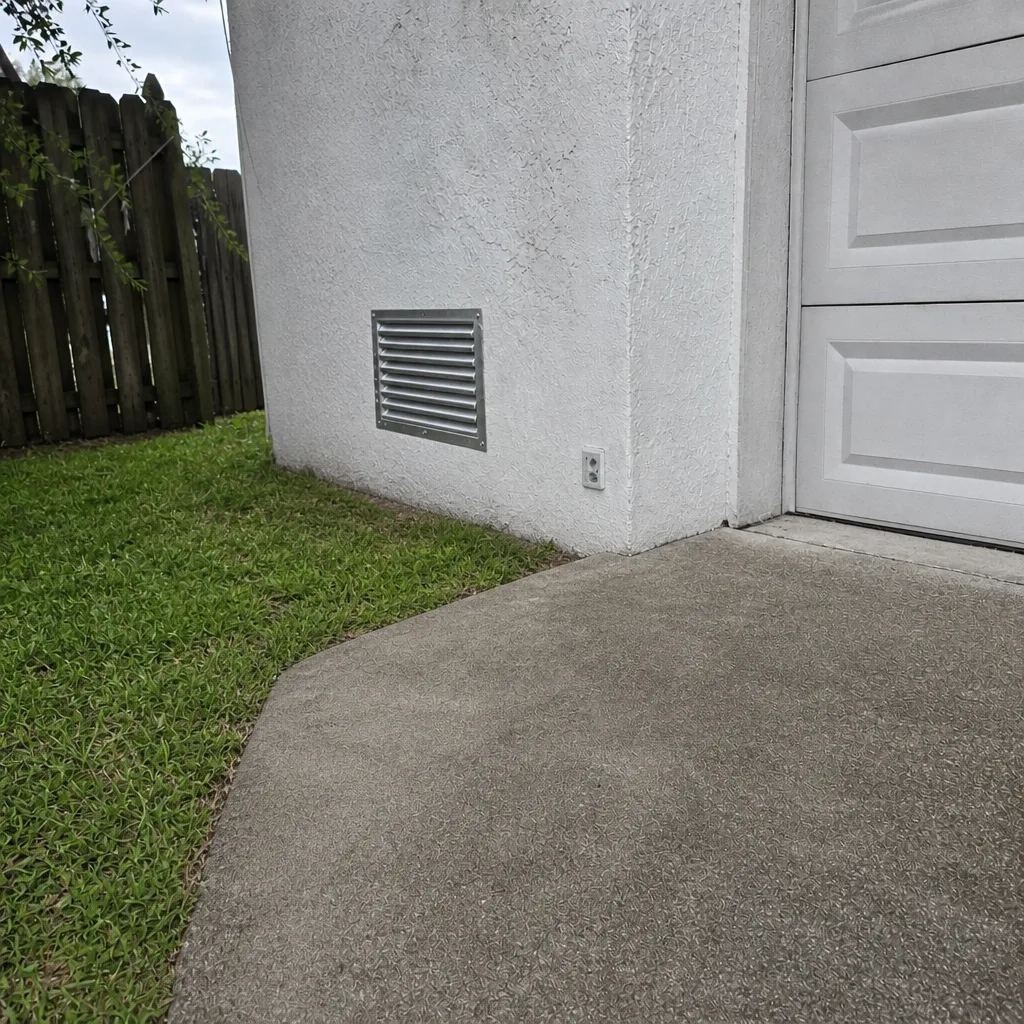 After
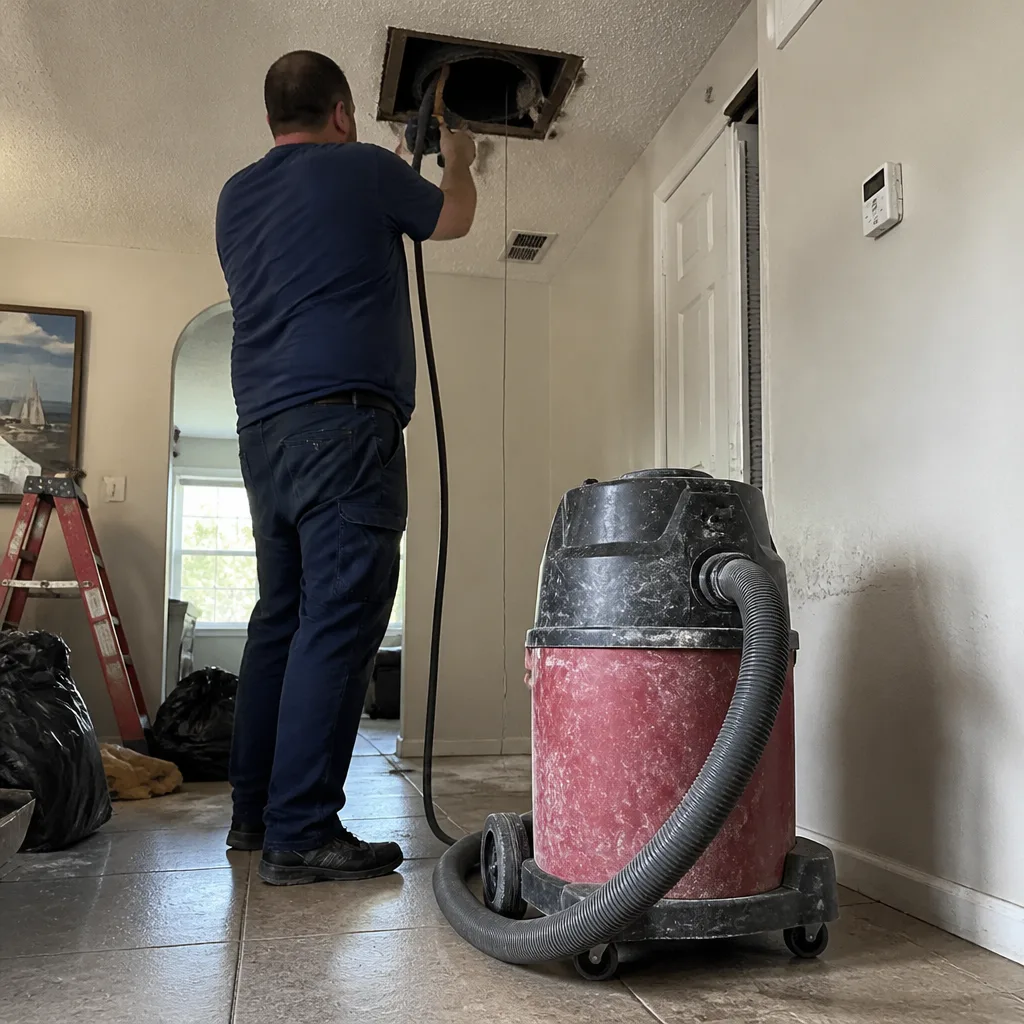 Before
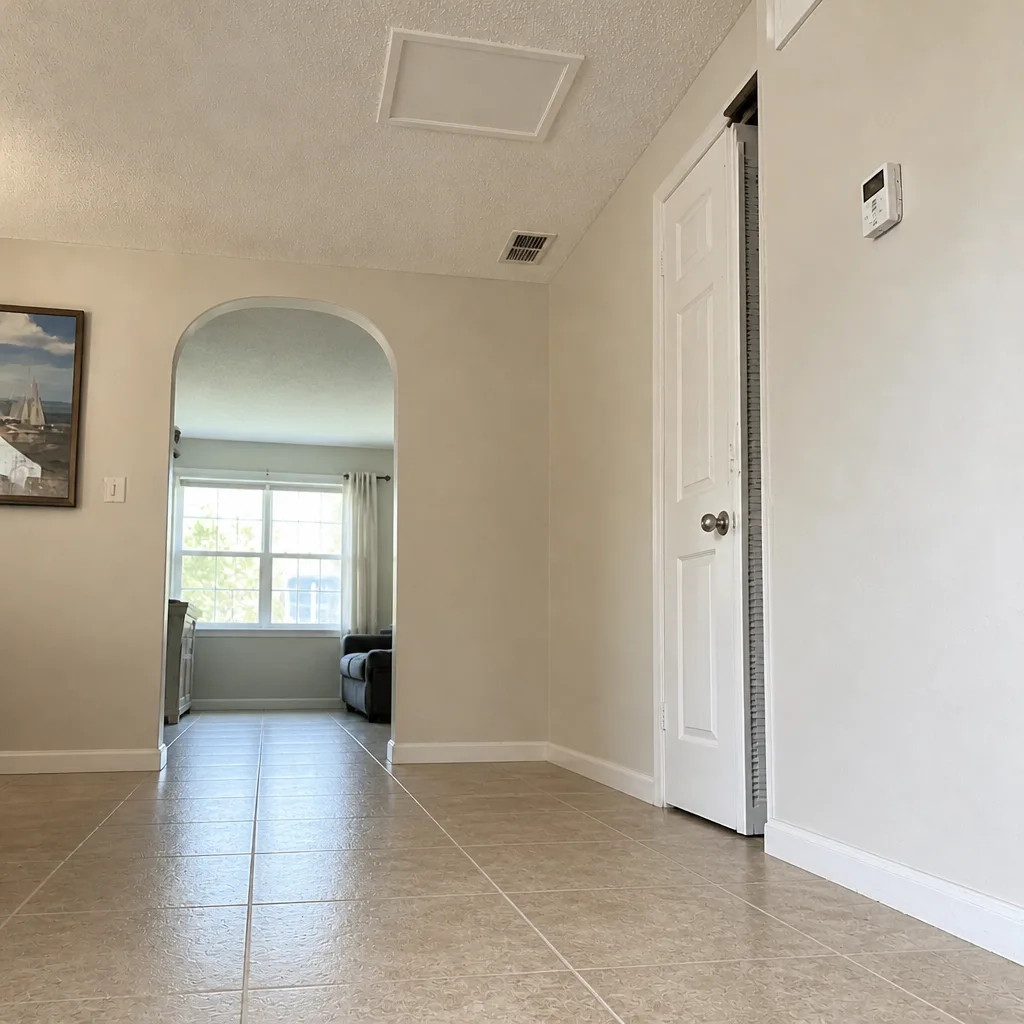 After
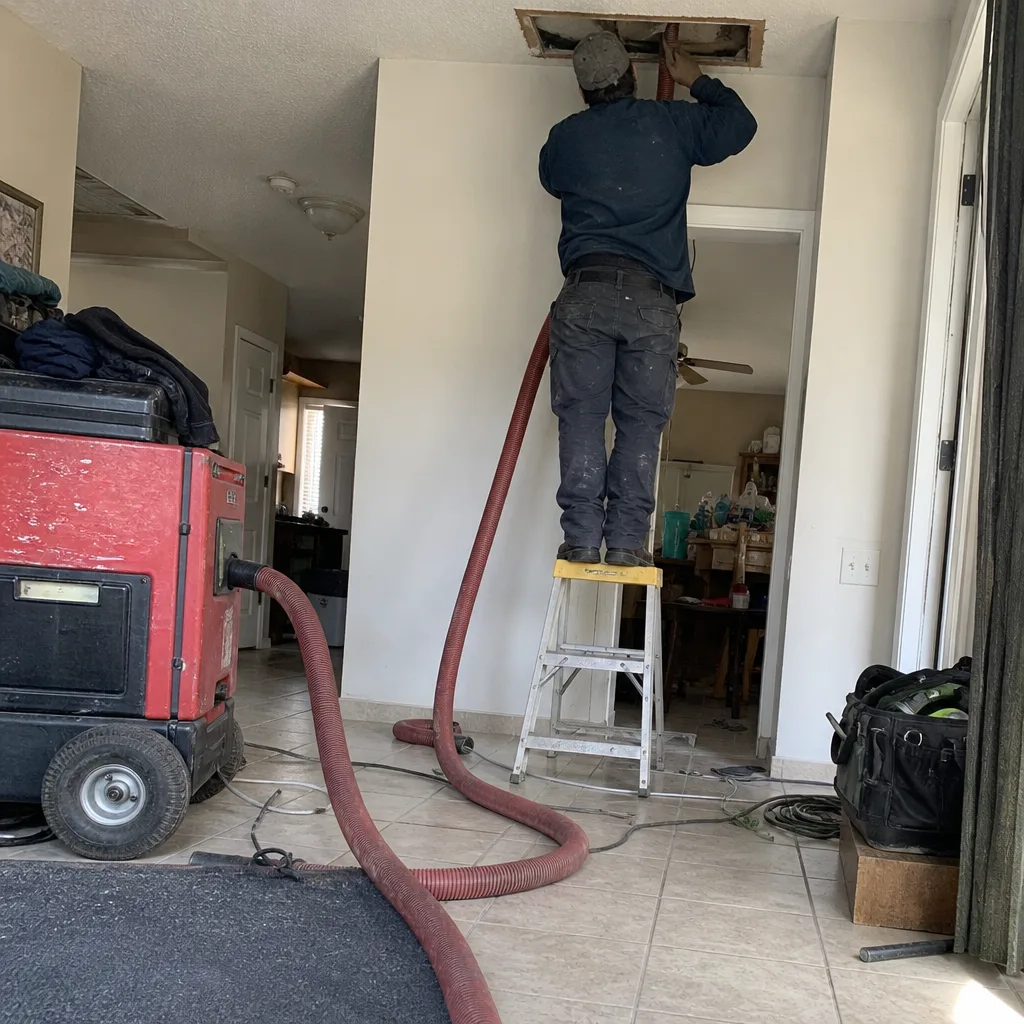 Before
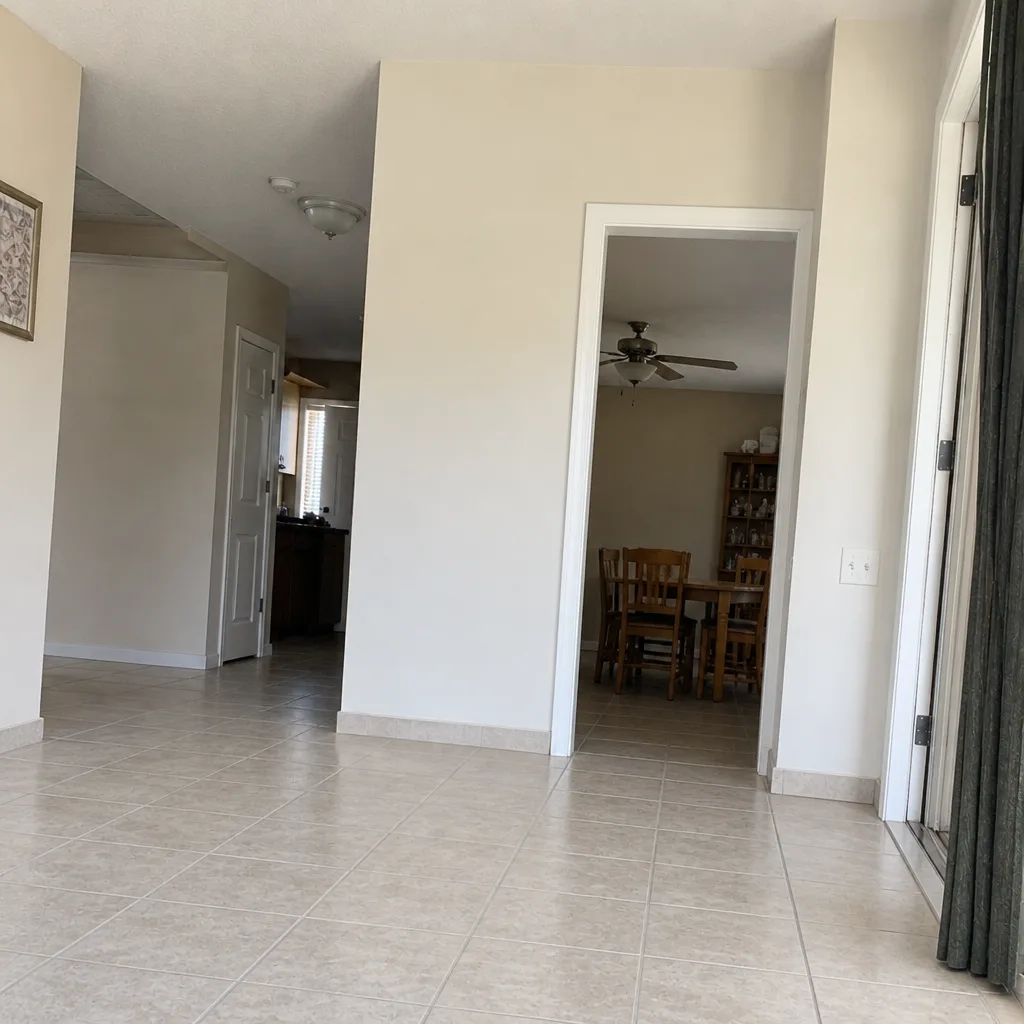 After
When to Call a Professional
Some duct problems are obvious. Visible dust plumes at the registers when the system kicks on. A musty smell that comes and goes with the air handler. Persistent allergy symptoms that track with the HVAC cycle. Rising energy bills with no other explanation. In each case, the question isn’t whether to clean. It’s how to hire someone qualified to inspect and actually fix what’s going on.
Others are less obvious. A dryer that takes two cycles to dry a load. A hot room that never cools. A duct system that hasn’t been inspected in years. Those situations deserve the same vetting process laid out above, because the contractor you hire frames the whole job.
Duct Cleaning Palm Bay offers free estimates in Palm Bay – call (844) 834-5154. We answer 24/7. Fast dispatch from 7am to 7pm, Sunday through Friday.
Frequently Asked Questions
Duct cleaning in Palm Bay is priced per job by a written estimate after the contractor sees the system, not by vent count or a teaser coupon. What drives the number is the size and layout of your duct system, the condition of the runs, and whether repairs are needed. The reason honest quotes vary is that houses vary. Ask for a flat whole-system price with the components named, and treat the written estimate as the actual number – anything lower quoted over the phone is a sales figure, not a real quote. Call (844) 834-5154 for an exact quote. Estimates are free.
No. Florida does not require a specific license to perform air duct cleaning, which is why the vetting burden falls on the homeowner. That’s why NADCA certification matters so much in this state – it’s a voluntary technical standard, not a license. Verify it directly through NADCA’s directory rather than accepting a logo or a verbal claim. A contractor who’s fine with you checking is the one worth hiring.
ACR is a specific written standard covering assessment, cleaning, and restoration, and NADCA certification means the contractor has committed to it. Saying you’re certified costs nothing; proving it takes a directory lookup. The standard requires evaluating the system before cleaning, containing debris during the work, removing contaminants at the source, and restoring the system afterward. When you ask a contractor about certification, ask what the certification requires. The answer tells you whether they actually hold it or are just using the word.
Cheap quotes are usually cheap because the process is less than what you’re comparing it to. Rotobrush rotary brush systems, Nikro HEPA vacuums, and Abatement Technologies negative-air machines are real equipment costs, and they take real labor to run properly through a house. A price far below the market usually means a shop vac, a per-vent pass, or both. That doesn’t mean you should chase the highest quote either – it means compare scopes, not bottom lines. Call (844) 834-5154 for a clear, whole-system quote. Estimates are free.
Before-and-after photos of your own ducts, taken during the job. Not stock images, not a brochure. A contractor with a real process will document the before and after of your actual system, and the photos should be part of the written scope of work. If photos aren’t offered, ask for them in writing before you book. It’s the single most direct answer to the trust problem in this trade, and it costs nothing to demand it.
There’s no universal schedule, and anyone quoting you a fixed interval is guessing. Most homes don’t need it every year. What triggers a real need is a change in conditions: visible dust at the registers, a smell tied to the air handler, recent renovation work, water intrusion in the attic, or a duct system that’s never been inspected. In Palm Bay, the heat load on attic ductwork makes inspection more useful than a calendar. Have the system looked at, and let the condition of the system set the schedule. Call (844) 834-5154 to book an inspection. Estimates are free.
The Bottom Line
Hiring a duct cleaning contractor in Palm Bay comes down to verification, not trust. Florida gives you no licensing board as a filter, so the work falls on you – and the good news is that the questions are simple. Ask for NADCA ACR certification and check the directory. Ask which equipment brands they use, and expect specific answers like Rotobrush, Nikro, or Abatement Technologies. Ask how they contain dust during the work. Ask whether they offer duct repair or only cleaning. Ask for a written whole-system scope with a flat price and before-and-after photos of your own ducts. Contractors who pass those questions are the ones worth a call. The ones who get uncomfortable with them have answered a different question for you.
Duct Cleaning Palm Bay performs air duct cleaning, dryer vent cleaning, and air duct repair with professional-grade equipment, and we’re happy to answer every question above before you book. Our technicians have up to 9 years of experience. Call (844) 834-5154 for a free estimate. We answer 24/7. Fast dispatch from 7am to 7pm, Sunday through Friday.
Written by the team at Duct Cleaning Palm Bay.