
Last updated November 15, 2026
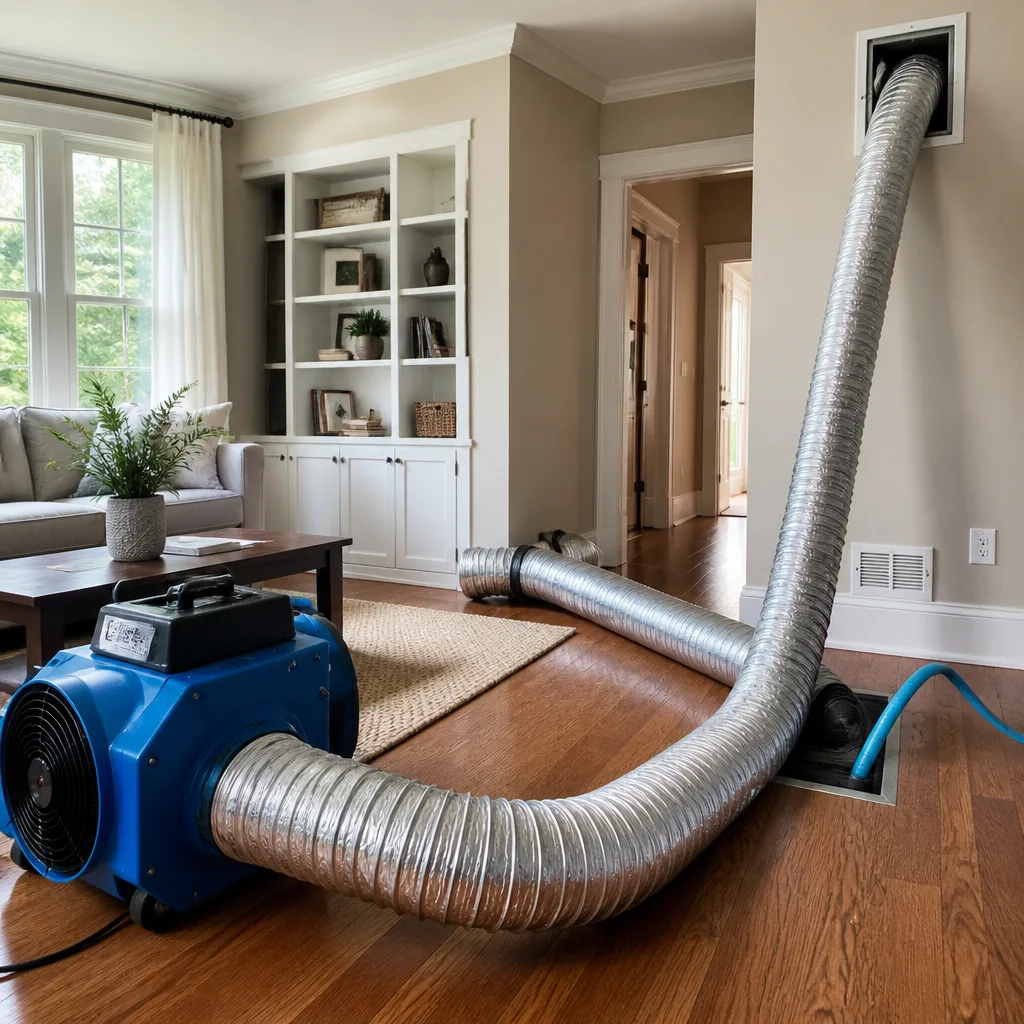 Whole-home duct cleaning
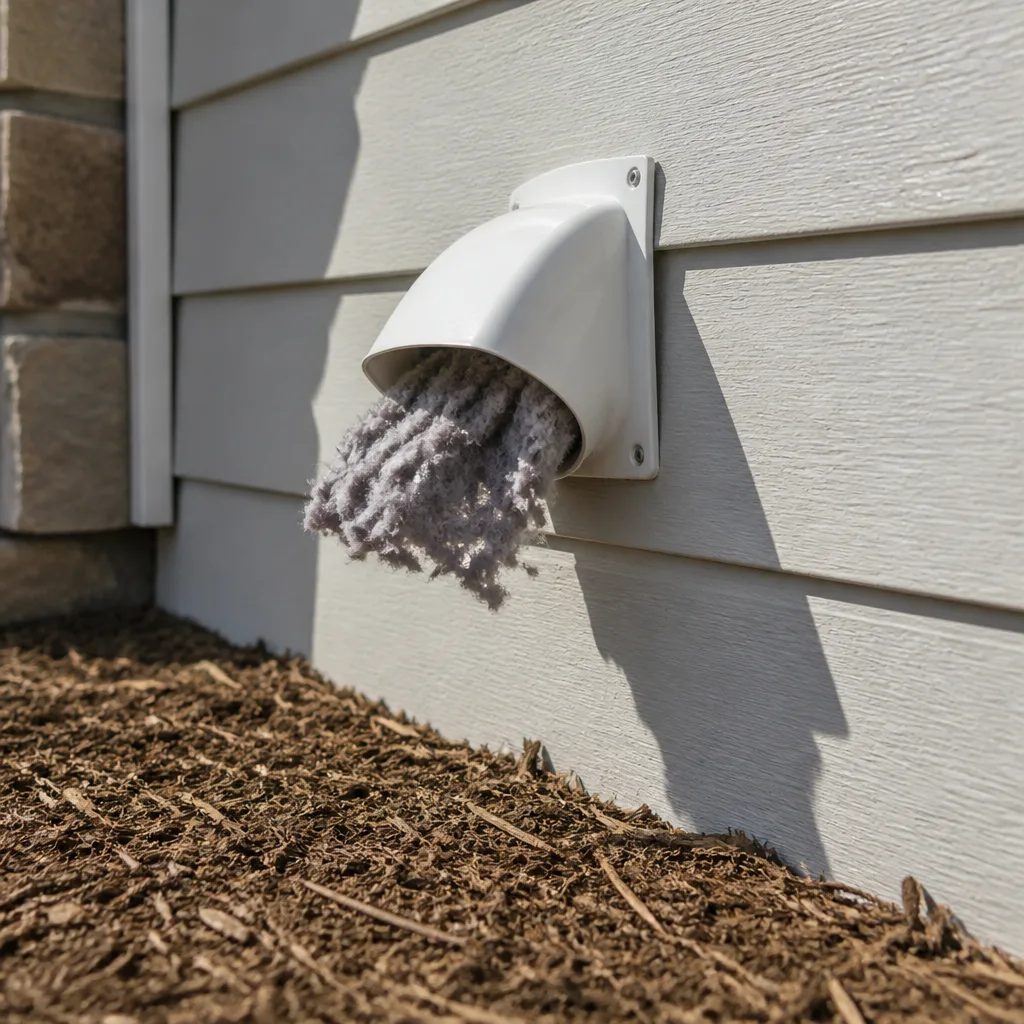 Dryer vent cleaning
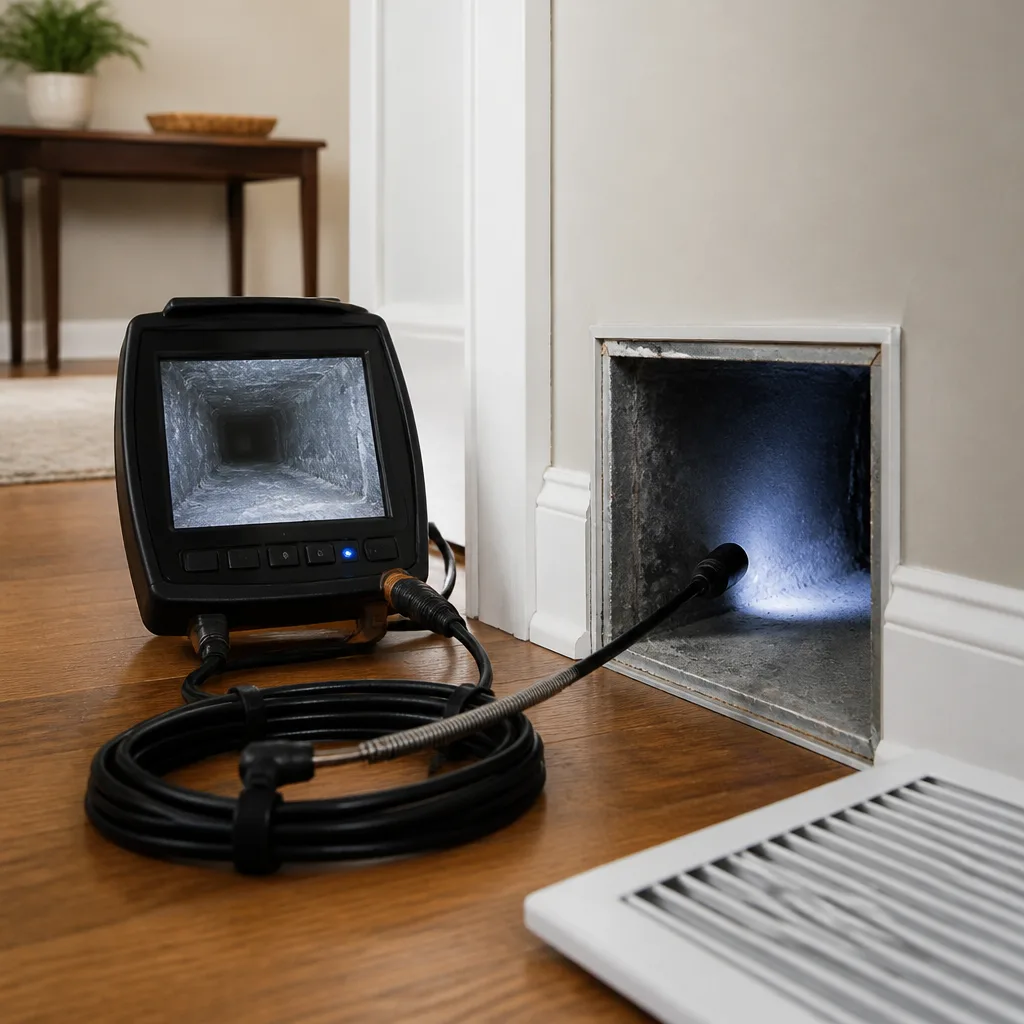 Camera inspection
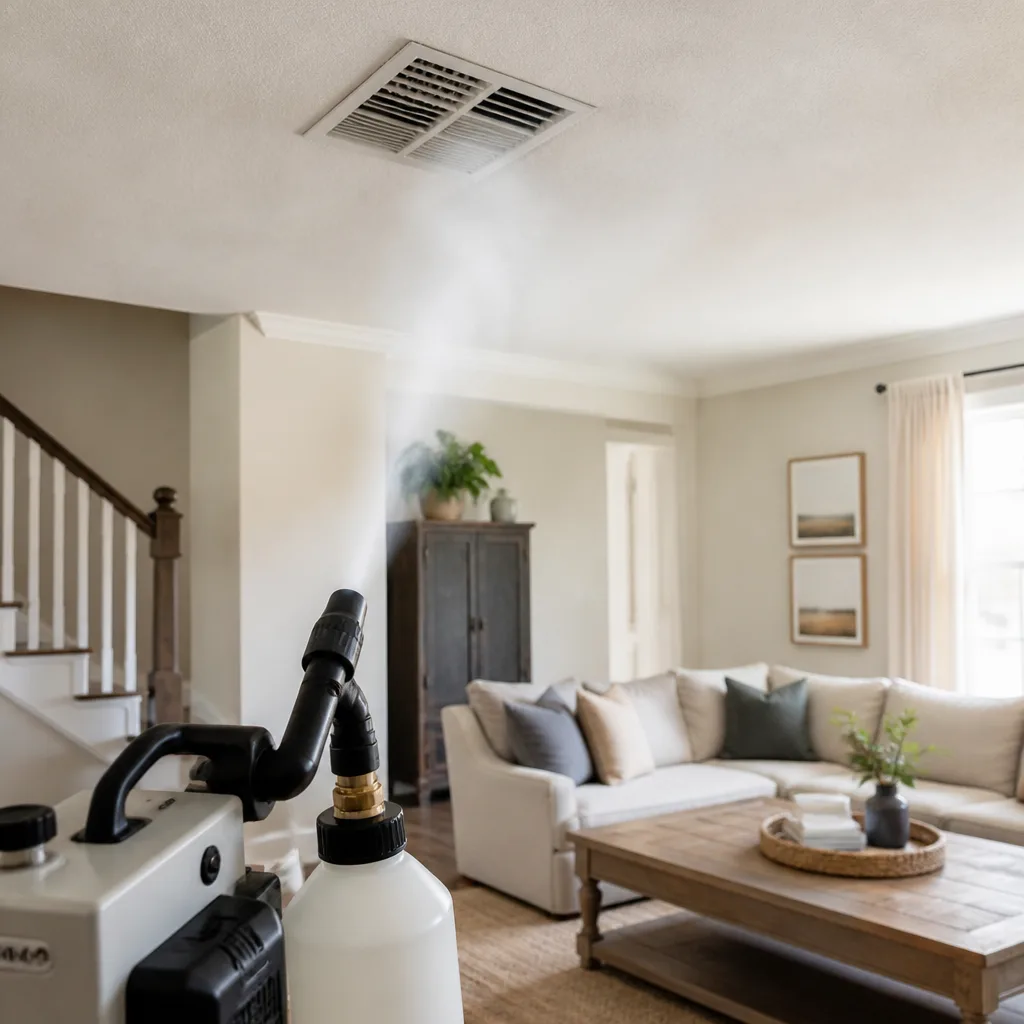 Sanitizing & deodorizing
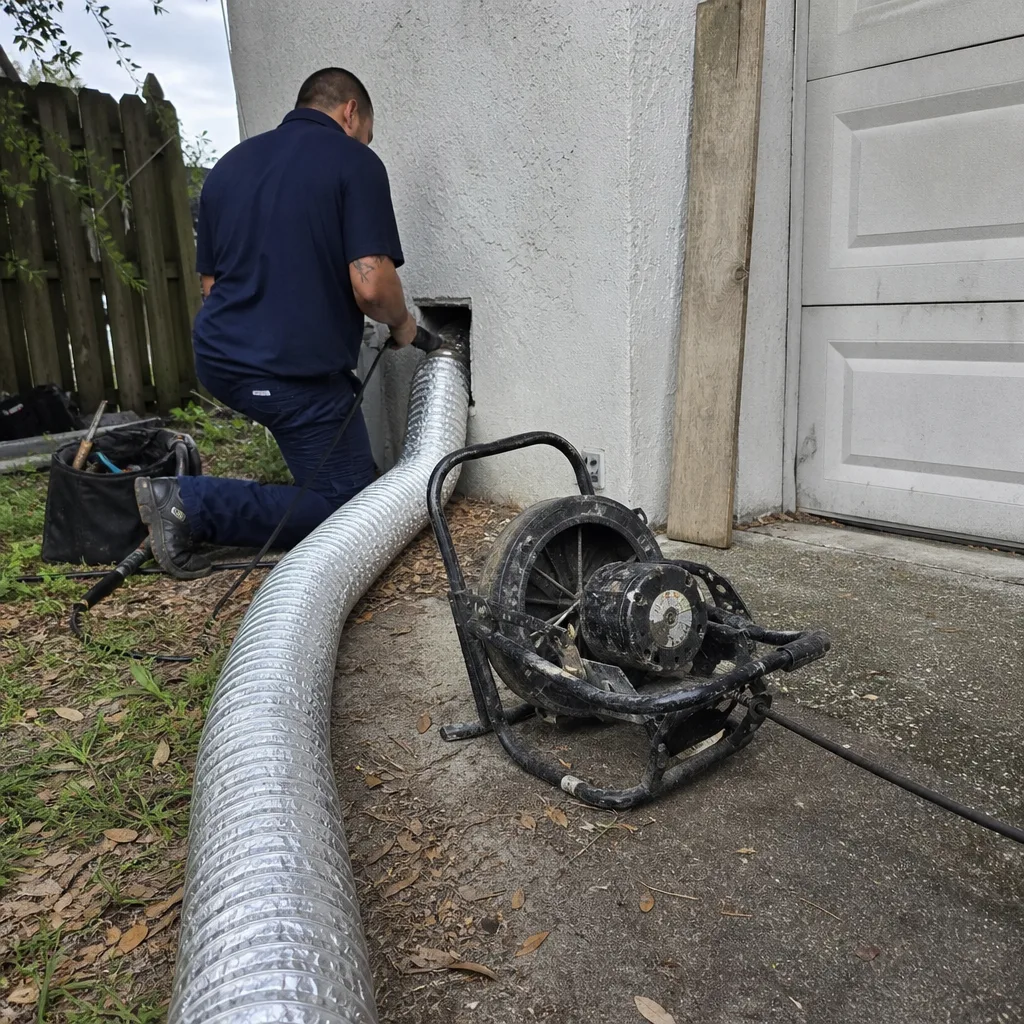
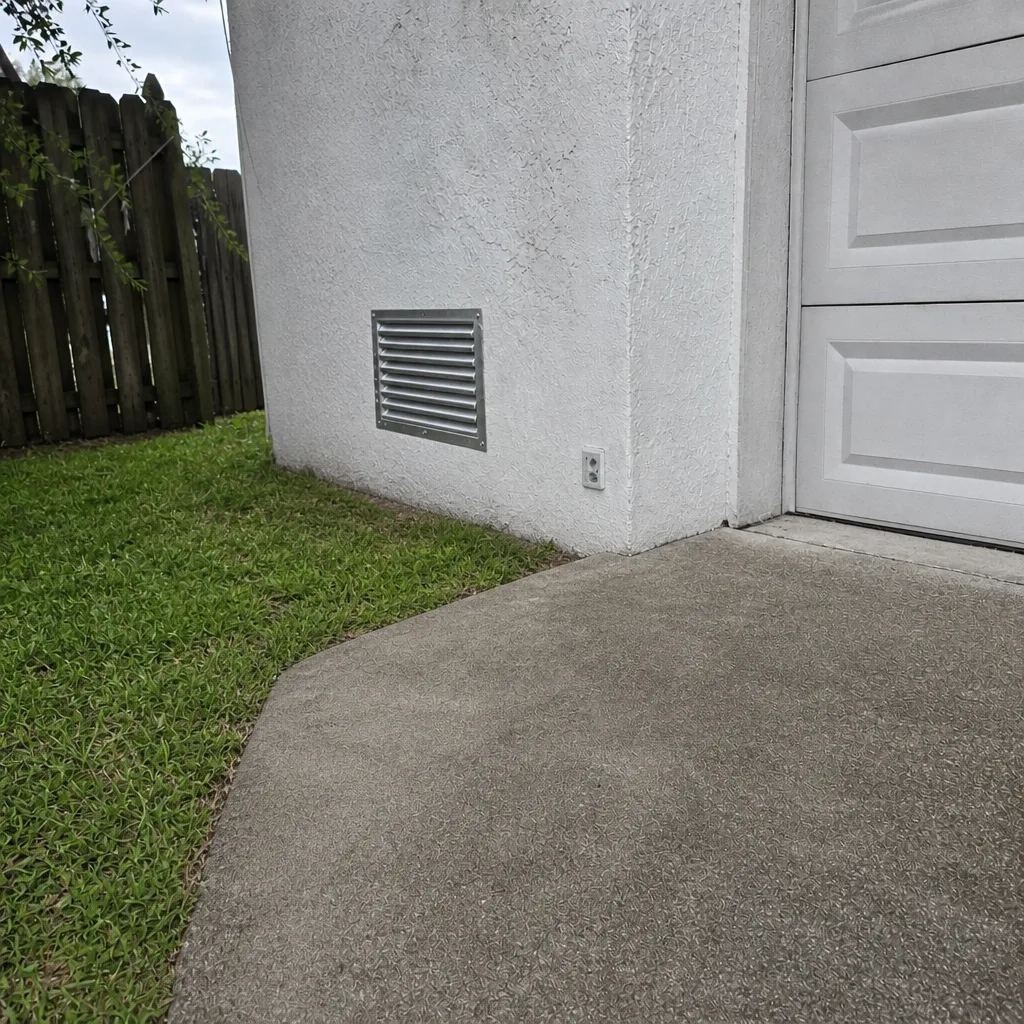
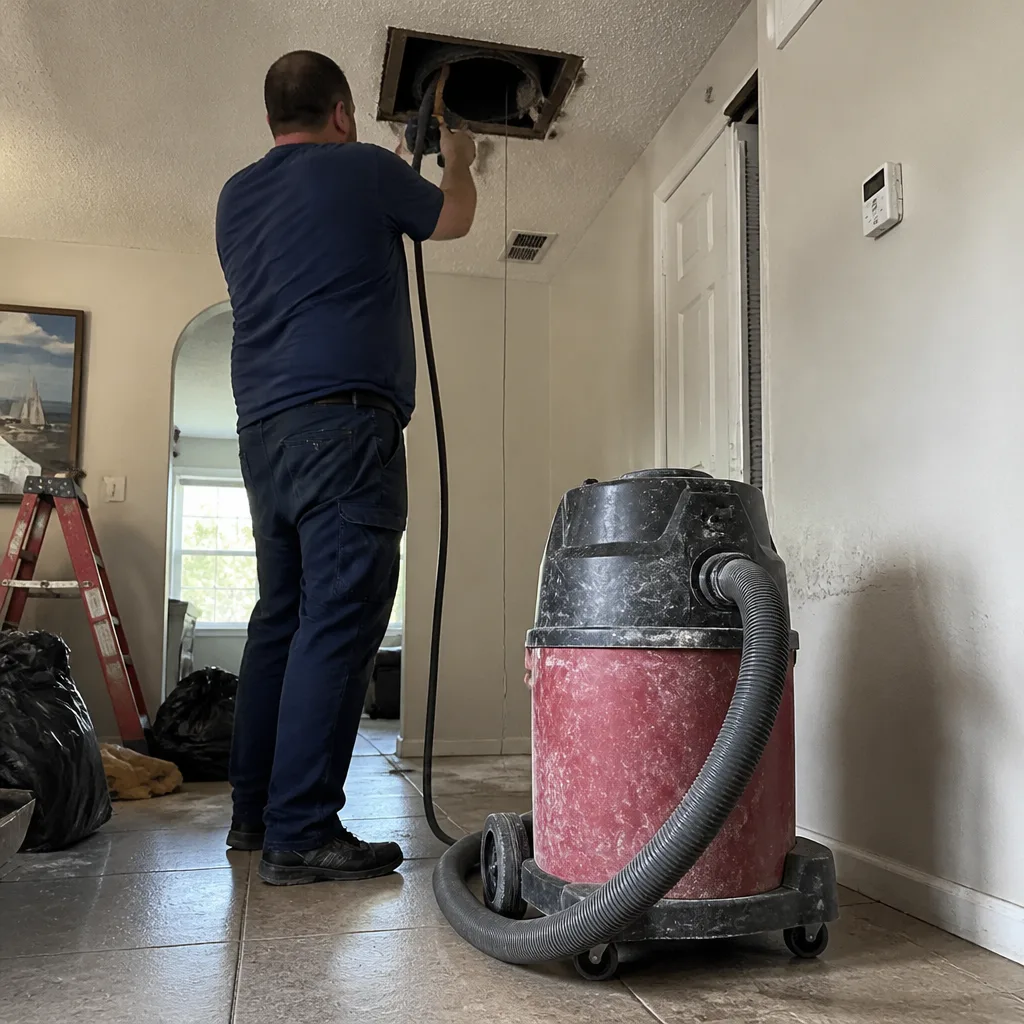
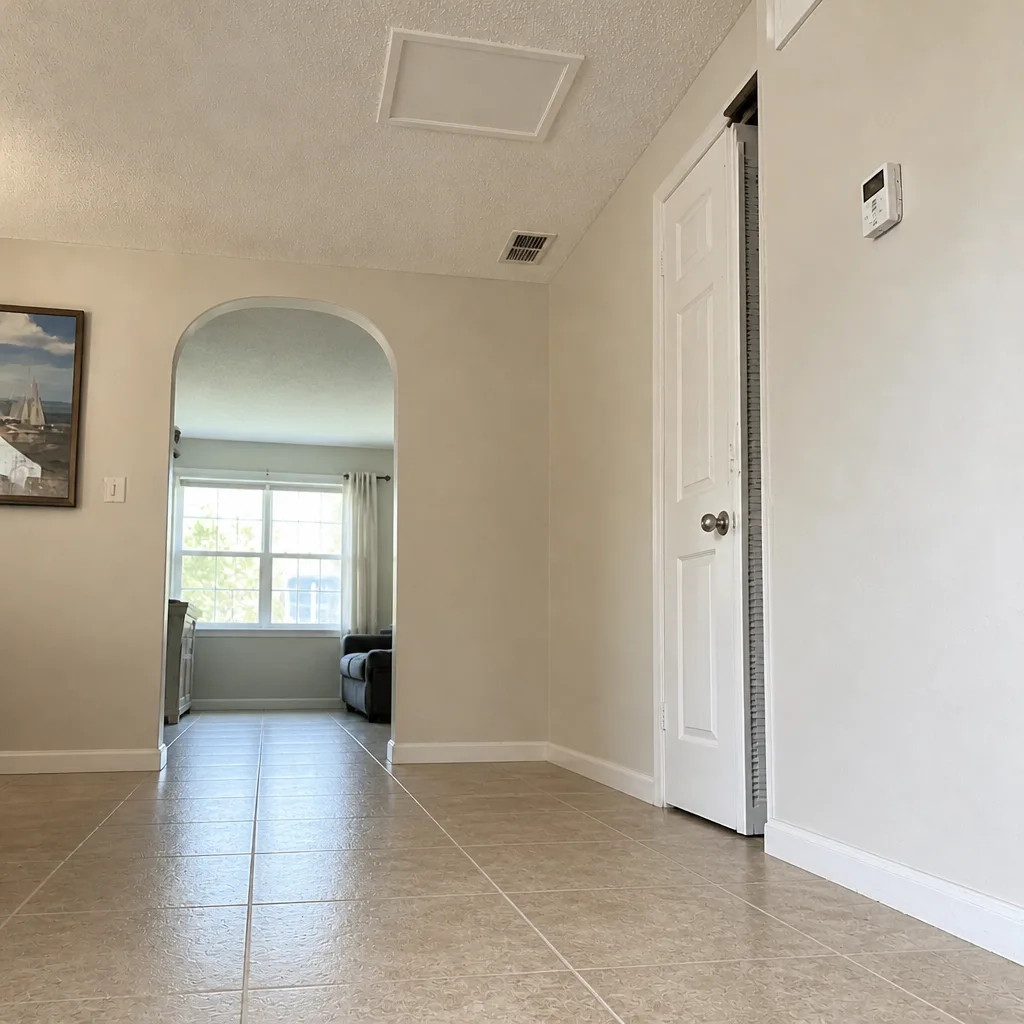
Whole-system duct and dryer vent check with before-and-after photos - you see exactly what came out of your vents
That "$99 whole-house special" is a bait ad - the real number appears once they are in your hallway, or the "clean" is a shop-vac at the register. We photograph the inside of your ducts before and after instead.
DIY vs Professional Air Duct Cleaning: The Palm Bay Homeowner’s Decision Guide
You can reach about 18 inches of ductwork from each register with a shop vac and a brush kit. In a typical Palm Bay home, that’s roughly 15% of the duct system’s surface area at best – and the act of loosening dust that far in often pushes it deeper or sends it drifting back into the room. Most DIY guides skip that part. This guide doesn’t. We’ll walk through what consumer tools actually do mechanically, where the contamination goes when nothing captures it, the specific cases where DIY is a sensible stopgap, and what professional equipment changes about the outcome. If you’re weighing a weekend project against hiring someone in Palm Bay, this is the comparison we’d want you to have.
Quick Answer
DIY air duct cleaning can handle the visible first foot or so of ductwork and is fine for spot-cleaning after a renovation or clearing a dryer vent, but it cannot create negative pressure, mechanically agitate the full liner surface, or capture what it loosens with HEPA filtration. In Palm Bay, a professional job with equipment like Rotobrush rotary brushes and Nikro HEPA vacuums cleans the whole system without redistributing debris into your living space – which is the difference that matters for anyone dealing with dust or allergy symptoms.
Styles & brands we work with
- Whole-home duct cleaning
- Dryer vent cleaning
- Camera inspection
- Sanitizing & deodorizing
Table of Contents
- What DIY duct cleaning actually does (and doesn’t)
- The contamination redistribution problem
- When DIY is a reasonable interim move
- What professional equipment actually adds
- Cost-benefit: DIY vs professional in Palm Bay
- Cleaning vs repair: a distinction DIY can’t bridge
- Dryer vent cleaning: the one DIY job worth doing
- Common mistakes to avoid
- When to call a professional
- Frequently asked questions
What DIY duct cleaning actually does (and doesn’t)
Consumer duct cleaning tools fall into three categories: brush kits you feed down a register by hand, a shop vac with a hose attachment, and compressed air cans sold as “duct blasters.” Each one has a real but narrow mechanical function. A hand brush can loosen surface dust on the inside of a duct wall for as far as the handle reaches. A shop vac can pull loose debris back toward the register if the seal is decent. Compressed air can break up light dust clumps.
What none of them can do is create negative pressure across the entire system. Professional duct cleaning relies on a vacuum source connected at the main trunk or a strategic access point, pulling the whole duct run into a controlled low-pressure state while a technician agitates the liner from the inside. Consumer tools work the opposite way – they push or stir debris locally, with no whole-system pressure differential to carry it toward a collection point. That’s a mechanical limitation, not a technique problem.
Three things consumer tools can’t replicate:
- Whole-system negative pressure. A shop vac pulls a few hundred cubic feet per minute at the hose. A professional negative-air setup pulls the entire duct system down to a controlled low pressure so every branch line is under suction at once.
- Rotary contact agitation. Rotobrush systems spin a brush head against the duct liner under controlled pressure, which is what actually breaks the bond between settled dust and the metal or flex surface.
- HEPA capture at the source. Consumer vacuums recirculate a portion of what they pick up. Nikro HEPA-filtration units are built to trap fine particulate rather than exhaust it back into the room.
If you’ve ever shop-vacced a duct and noticed more dust in the air afterward, that’s the mechanism at work. You moved contamination. You didn’t remove it.
The contamination redistribution problem
Here’s the part most DIY tutorials skip entirely. When you agitate dust inside a duct without negative pressure holding the whole system under suction, that dust has to go somewhere. Air moves from higher pressure to lower pressure. Your shop vac creates a small low-pressure zone at the register end. The rest of the duct run is at room pressure. So the loosened debris spreads – some toward the vac, some deeper into the branch, and some out the supply registers into the room you were trying to clean.
This is why a homeowner can spend an afternoon cleaning ducts with a shop vac and end up with more visible dust settling on furniture the next morning. The contamination didn’t disappear. It got distributed.
Professional negative-air machines, like the Abatement Technologies units used in restoration work, solve this by establishing a controlled pressure gradient across the entire duct system before any agitation begins. The technician agitates the liner while the whole system is under suction, so dislodged debris moves toward the collection point rather than out into the living space. The sequence matters as much as the equipment. Agitation before pressure equals redistribution. Pressure before agitation equals removal.
In Palm Bay, where homes often run air conditioning most of the year, ducts stay humid and dust has a tendency to cling rather than fall. That makes mechanical agitation more important, not less – and it makes the redistribution problem more likely with DIY, because the dust doesn’t want to leave on its own.
When DIY is a reasonable interim move
We don’t think DIY duct cleaning is useless. There are specific situations where a homeowner with the right tools and realistic expectations can do something genuinely helpful without calling anyone.
- Single-room spot cleaning after a renovation. If you just had drywall work done in one room and sawdust has settled into the closest supply register, cleaning that register and the first foot of visible duct with a shop vac and a soft brush is reasonable. You’re not trying to clean the system – you’re preventing the initial load from spreading to the rest of the house.
- Clearing a dryer vent. This is the one job we’d actively encourage homeowners to handle themselves if they’re comfortable doing it. A dryer vent is a short, accessible run, and keeping it clear is a fire-prevention measure. Remove the lint trap and duct connection, use a vent brush on a flexible rod, and clear the exterior flapper. It’s a standalone task – not the same as duct cleaning.
- Register and grille washing. Pulling the floor or ceiling registers and washing them in the sink is straightforward, useful, and worth doing before any professional cleaning. It’s also a good moment to check the gaskets and make sure the grilles aren’t warped or loose.
What DIY cannot reasonably handle in a Palm Bay home: cleaning the trunk line, cleaning branch runs longer than a couple feet, cleaning flex duct (which tears easily under hand brushes), or addressing ductwork that has visible dust pattern buildup at the registers – which usually signals a system-wide problem. If you’re noticing recurring dust on horizontal surfaces a day or two after cleaning, that’s contamination being pushed back into the room, and it’s the point where DIY stops being helpful.
For a full-system job, professional air duct cleaning does what the shop vac can’t, because the equipment setup is designed around the whole system rather than a single register.
What professional equipment actually adds
The equipment list is where the real difference shows up. Not because brand names are magic, but because each piece solves a specific mechanical problem that consumer tools can’t.
Rotobrush rotary contact cleaning
Rotobrush systems use a spinning brush head on a flexible shaft that runs through the duct under controlled pressure. The brush contacts the duct wall continuously as it advances, which is what breaks settled dust and light buildup free from the metal or flex surface. Hand brushes hit the wall unevenly and can’t reach more than a foot or two. A rotary system reaches the full run. This is the standard piece of equipment HVAC and restoration contractors rely on for a reason – it agitates the entire liner surface, not just what you can reach by hand.
Nikro HEPA-filtration vacuums
A vacuum is only as good as its filter. Consumer shop vacs use pleated filters that catch the big stuff but pass fine particulate back into the air. Nikro HEPA units are built to capture fine dust at the filter, which means what’s pulled out of your ducts stays in the collection container rather than getting exhausted into the room. For a homeowner dealing with dust or allergy symptoms, this is the part of the equipment list that matters most day-to-day.
Abatement Technologies negative-air machines
These are the same machines used in restoration and remediation work to keep contamination from spreading. In duct cleaning, negative-air units establish a controlled pressure gradient across the duct system so that when a technician runs the rotary brush, the dislodged debris moves toward the collection point rather than outward. Combined with HEPA filtration, this is the setup that makes cleaning a removal process instead of a redistribution process.
Beyond the cleaning equipment, a full-service job often involves indoor air quality components – Honeywell and Aprilaire filtration products are common in Palm Bay homes because they integrate cleanly with existing HVAC systems. If the ducts are cleaned and the filtration system downstream is compromised, the ducts get dirty again faster than they should. That two-part view is why we work on both sides of the system, not just the ductwork itself.
If you want to see the difference in person, ask to see the equipment before any work starts. Any contractor confident in their setup will happily show you the rotary brush, the HEPA vacuum, and the negative-air machine before touching a register.
Cost-benefit: DIY vs professional in Palm Bay
The honest cost comparison has three parts: what a professional job costs, what DIY actually costs when you’re realistic about it, and what each accomplishes. Palm Bay duct cleaning prices fall in a typical range depending on system size, accessibility, and whether any repair is needed. These are estimates; the written estimate you receive sets the final price.
- DIY tool cost: A decent brush kit runs $25-$60. A shop vac capable of pulling a real vacuum at a register runs $80-$150. Compressed air cans are $10-$20 each and you’ll need several. Total: $120-$250 in tools, most of which you’ll use once.
- DIY time: Two to four hours for a single-story home with accessible registers, more if you’re removing and reseating grilles.
- What DIY accomplishes: The first 12-18 inches of duct from each register, plus visible register cleaning. Maybe 15% of total duct surface area.
- Professional whole-system cleaning: A typical Palm Bay single-family home ranges from $350-$700 for full-system cleaning with professional equipment, depending on system size and accessibility.
- What professional accomplishes: The entire duct system including trunk line and branches, with negative pressure and HEPA capture throughout.
- Duct repair add-on if needed: $250-$600 typical for disconnected joints, crushed flex runs, or sealing compromised sections – work DIY won’t uncover.
The gap in dollar terms is $200-$450. The gap in function terms is that DIY cleans about a sixth of the system and risks redistributing the rest. Professional cleans the whole thing with capture. If the underlying reason you’re considering duct cleaning is dust buildup, allergy symptoms, or HVAC efficiency problems, the professional job addresses the actual cause; DIY handles a fraction of it and can occasionally make things temporarily worse.
A note on the “cheap quote” problem
In the Palm Bay market, you’ll see ads for duct cleaning at prices that seem too low to cover the labor. Those prices typically turn into a much larger invoice once a technician is on site, because the teaser rate covers a cursory pass and everything beyond that gets upsold. The honest way to hire is to ask for a per-system price in writing before work begins, not a per-vent figure. Whole-system pricing is the only way to compare quotes fairly, because it accounts for the actual scope of the job.
Cleaning vs repair: a distinction DIY can’t bridge
A duct system can be dirty and functional, or clean and broken. Those are two different problems, and most DIY guides only address the first one. In Palm Bay homes, duct defects are common – disconnected flex runs at joints, crushed sections behind drywall, improperly sealed connections at the air handler, and occasionally ductwork that was never properly sized to the room it serves. Cleaning a system with a disconnected joint is like mopping a floor with the drain open.
Professional cleaning alone won’t fix a duct defect. That’s why we treat air duct repair as a distinct service, not an upsell. When a technician is running the rotary brush through the system, they can see and feel where flex has collapsed, where joints have separated, and where dust is leaking into an unconditioned space rather than moving through the duct. Those findings get reported back, and if repair is needed, it happens as part of the same visit or as a follow-up.
DIY can’t surface any of this, and even if you spot a crushed flex run behind the drywall yourself, reseating a duct joint or replacing a section of flex properly requires specific materials, proper sealing tape (not duct tape, despite the name), and HVAC knowledge to reconnect it without creating new leaks. That’s a licensed-trade problem. It’s also why hiring a contractor who performs both cleaning and repair saves you from hiring a specialist to come back later.
For a broader look at what we do locally, Palm Bay is where our work is anchored.
Dryer vent cleaning: the one DIY job worth doing yourself
We list dryer vent cleaning as a dedicated service, but we’ll also tell you it’s the one item on this list where homeowner DIY is genuinely viable. The dryer vent is a short, accessible run. A flexible brush kit attached to a drill or hand-cranked, plus a shop vac at the exterior vent, clears most typical lint buildup. In a single-story Palm Bay home where the dryer backs against an exterior wall, it’s a 30-minute job.
Where DIY dryer vent cleaning runs into trouble is when the vent run is long, has multiple elbows, or discharges onto the roof. Those configurations trap lint in places a hand brush won’t reach, and lint buildup in a dryer vent is a real fire risk – one of the leading causes of residential fires. If you’re not sure your vent run is clear all the way through, or if you notice the dryer taking noticeably longer to dry a load, that’s the point to call someone who can run the proper equipment through it.
Dryer vent cleaning should always be treated as its own task, scheduled separately from air duct cleaning, not as a bonus service bolted onto a duct job. They’re different jobs with different equipment and different failure modes. Professional dryer vent cleaning done properly uses the right brush and vacuum setup for lint removal, not a shop vac and a hope.
Common mistakes to avoid
- Using compressed air inside a duct without a vacuum running. You’ll force dust out of the registers and into the room. Compressed air in duct cleaning only works in combination with negative pressure, so skip it if you’re not set up for that.
- Running a hand brush through flex duct. Flex duct has an internal wire coil and a thin liner. A stiff brush will tear it, and once torn, the duct leaks conditioned air into your ceiling or crawlspace. Palm Bay homes with flex runs are especially prone to this – if you don’t know whether a run is flex or rigid metal, stop and check before inserting a brush.
- Assuming visible dust means the whole system is dirty. Dust at the registers can come from an improperly sealed return, a dirty air filter, or a leaky connection at the air handler. Cleaning the ducts without fixing the source just resets the clock. Check the filter first, then look for gaps at the furnace and return grille.
- Cleaning only the registers and calling it done. The register is the least contaminated part of the system – the trunk line and branch runs hold the settled dust. Pull-and-wash registers are worth doing, but they’re not duct cleaning.
- Trusting a teaser-priced quote. In Palm Bay, as in most markets, a very low advertised duct cleaning price usually means a quick pass with a shop vac, followed by an on-site upsell. Ask for a per-system price in writing, and ask what equipment will be used.
- Skipping dryer vent maintenance entirely. A blocked dryer vent makes the dryer work harder, extends dry times, and creates a fire hazard. Check the exterior flapper every few months for lint buildup, and clean the vent run once a year or any time dry times increase noticeably.
- Cleaning the ducts without addressing a known air quality concern downstream. If your home has a filtration system or IAQ component, dirty ducts feed a dirty filter and vice versa. Cleaning the ducts alone with a compromised filter downstream is a partial fix.
When to call a professional
You should call a professional when dust returns to horizontal surfaces within a day or two of cleaning, when multiple rooms show visible dust patterns at the registers, when anyone in the household has allergy or respiratory symptoms that seem tied to indoor air, when the HVAC system is working harder than it should, or when you suspect a duct defect. Ductwork that’s been wet, crushed, disconnected, or improperly sealed is a repair problem, and cleaning around it wastes money. If you’re not sure which category you’re in, an inspection answers it quickly. Duct Cleaning Palm Bay offers free estimates in Palm Bay – call (844) 834-5154 to schedule one. We answer 24/7, with fast dispatch from 7am to 7pm, Sunday through Friday.
Frequently asked questions
You can clean the accessible first few feet of duct from each register, plus the registers themselves, but you can’t clean the full duct system without negative pressure and HEPA capture. For most Palm Bay homes, DIY duct cleaning covers around 15% of the system’s surface area and can push contamination into the living space rather than removing it. If dust keeps coming back after a DIY attempt, that’s the sign to call someone with the right equipment.
Cheap quotes usually cover a cursory pass with consumer-grade equipment, then get upsold on site once a technician is there. A fair quote is priced per system in writing before work starts, so you know the scope of what’s included. If a quote seems too low to cover the labor for a full-system clean, ask what equipment will be used and whether the price is per system or per vent. Call (844) 834-5154 for an exact quote – estimates are free.
Ask for before-and-after photos of your own ducts, and ask to see the equipment being used before any work starts. Rotary brush systems like Rotobrush and HEPA vacuums like Nikro are visible pieces of equipment – if a technician shows up with a shop vac and a promise, that’s your answer about what will happen. A legitimate contractor will happily walk you through the setup. For a free estimate, call (844) 834-5154.
Most homes don’t need duct cleaning on a fixed schedule. Cleaning is warranted when there’s visible dust buildup at registers, after a renovation, after a system has been wet or damaged, or when allergy symptoms suggest the ducts are contributing. In the Palm Bay climate, where air conditioning runs most of the year and ducts stay humid, dust tends to cling to surfaces more than it would in drier climates, which can make buildup more visible over time. If you’re wondering whether it’s time, an inspection answers it – call (844) 834-5154 for a free estimate.
For spot-cleaning after a renovation, washing registers, and clearing a dryer vent, yes – those are legitimate DIY tasks that accomplish something real. For whole-system duct cleaning, DIY usually costs more in time and tool purchases than the gap between DIY and professional pricing, while delivering less actual cleaning. The most common outcome is spending an afternoon cleaning a fraction of the system and still needing a professional job afterward. Call (844) 834-5154 for a free estimate if you’re not sure which category your home is in.
Yes, mostly through flex duct damage and improper reseating of connections. Stiff brushes tear flex duct liners, which creates air leaks into unconditioned space. Shop vac hoses forced against registers can crack older plastic collars. And if you don’t re-seal a connection properly after cleaning, you’ve created a duct leak where there wasn’t one. Those are repair costs a professional cleaning would have avoided.
The Bottom Line
DIY duct cleaning can handle a small, useful piece of the job: washing registers, spot-cleaning after a renovation, and clearing a dryer vent. What it can’t do is create negative pressure across the whole system, mechanically agitate the entire duct liner, or capture what it dislodges with HEPA filtration – which means whole-system DIY cleaning redistributes contamination rather than removing it. For a Palm Bay homeowner dealing with recurring dust, allergy symptoms, or HVAC efficiency concerns, the professional job addresses the actual problem. For a Palm Bay homeowner who noticed some dust near one register after a small project, the shop vac and a soft brush are fine.
The middle ground is a free estimate: it tells you which category your home is in without costing anything. We clean, and we repair, using the same equipment professional restoration contractors rely on. If you’d rather see the setup before deciding, ask to see our equipment – we’ll show you the full arsenal. Call (844) 834-5154 for a free estimate. We answer 24/7, with fast dispatch from 7am to 7pm, Sunday through Friday. Cleaner air starts at the source, and the source is your ducts. For a broader look at what we do, see Duct Cleaning Palm Bay.
Written by the team at Duct Cleaning Palm Bay.
See the difference
 Before
 After
 Before
 After
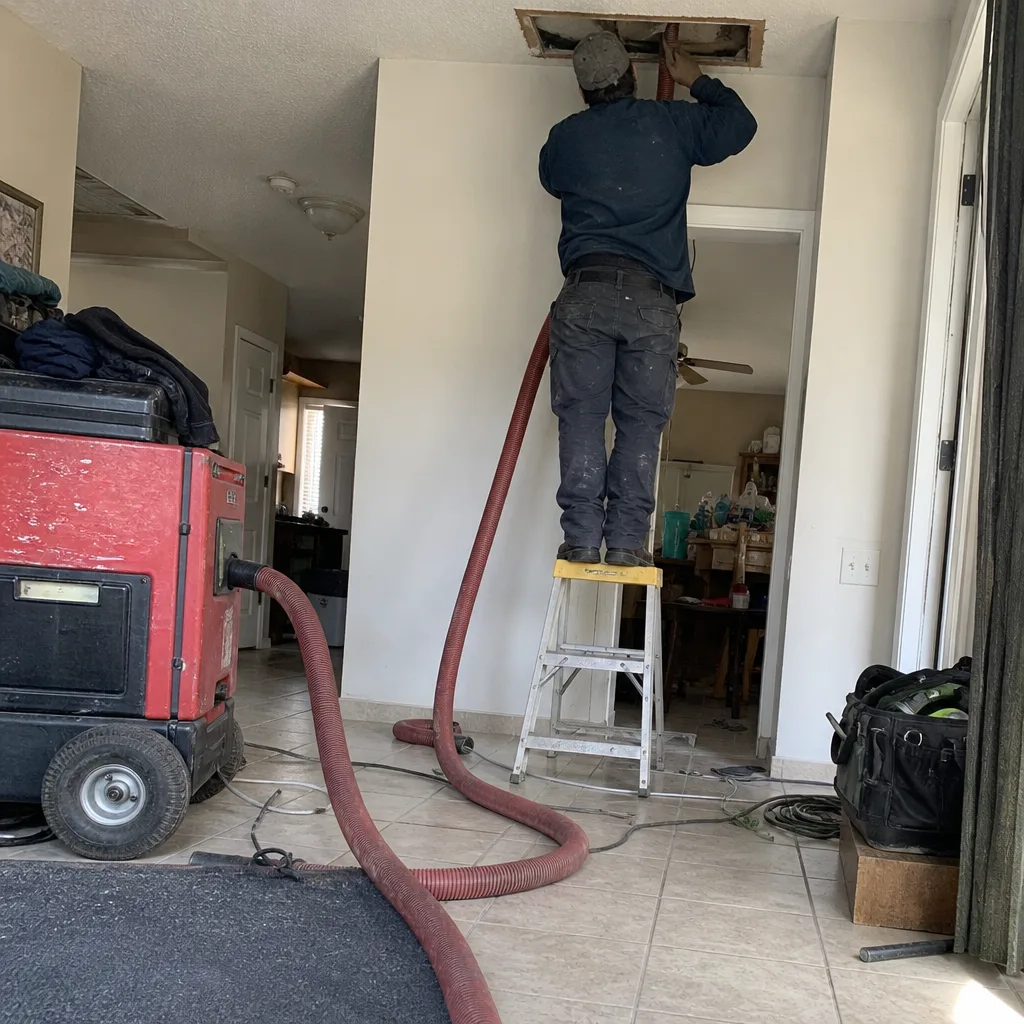 Before
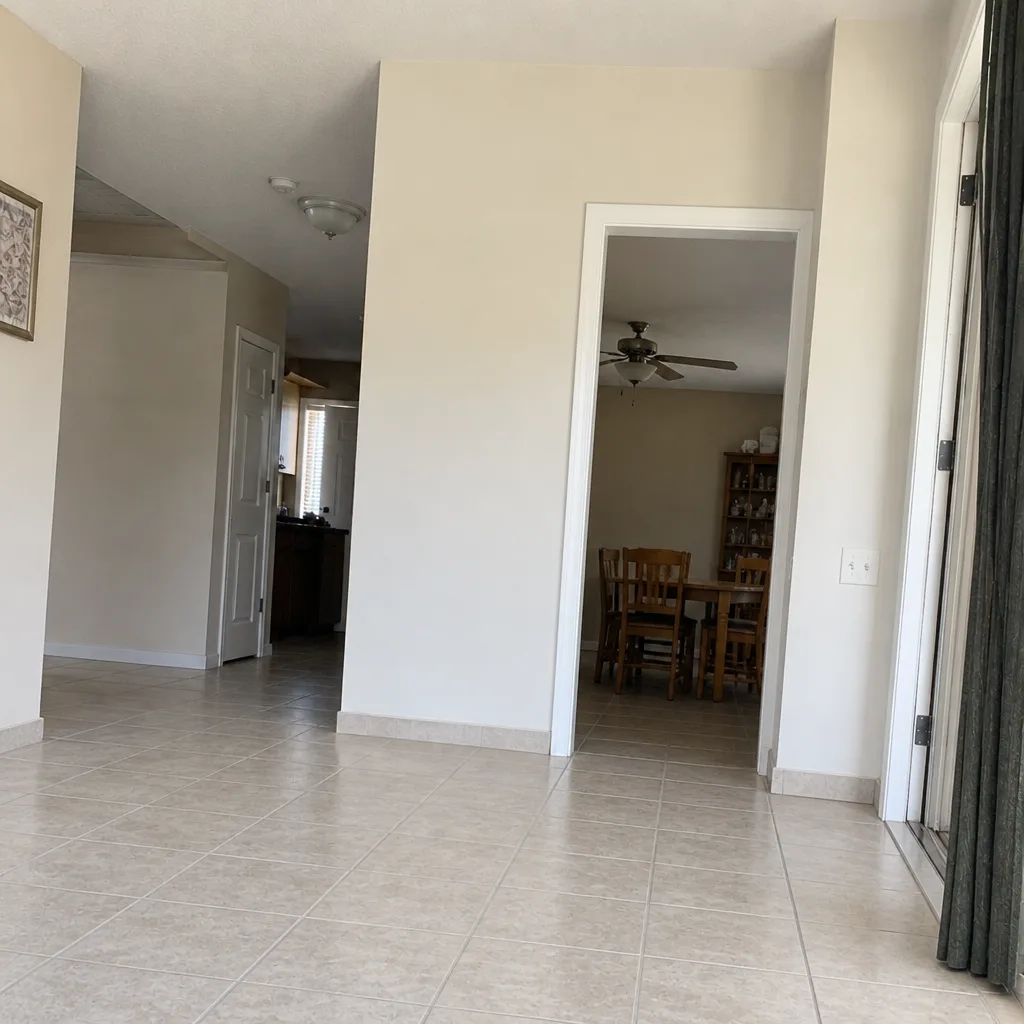 After